“Tax cut would bring long-awaited hope and change”
– Alfredo Ortiz in Fox News
In Fox News, Alfredo Ortiz writes the GOP’s last great hope to save their first year agenda is to pass middle class and small business tax cuts. He supports his claim by citing recent Gallup polling, which shows “significant” middle class tax cuts are supported by a majority of Americans. Mr. Ortiz writes a tax cut “is the most direct way to boost wages,” and provide middle class families relief, in that a tax cut would improve wages by providing small business employers the funds to provide a pay raise. He writes: “Whether your politics are left, right, or center, this is something we can all agree on: More money in more Americans’ pockets is a good thing for everyone.”
In California’s Orange County Register, contributor Joel Fox writes that “cutting taxes for large and small businesses to 15 percent, as President Donald Trump wants to do, puts more resources in the hands of business leaders and entrepreneurs to expand business and create jobs.”
In immigration news, at American Greatness, contributor Spencer Morrison calls the President’s decision to end DACA “a big win” for “American workers and the rule of law.”
And in The Hill, former House Judiciary Committee staffer and immigration lawyer Nolan Rappaport writes that President Trump ended DACA in the most humane way possible, saying that the President’s decision now places the onus on Congress to deal with this issue.
In regards to judicial nominations, in National Review, contributor Shannen Coffin writes that the President has kept his promise by nominating conservatives to federal judgeships, calling the recent nomination of White House Deputy Counsel Greg Katsas to the D.C. Court of Appeals a “Trump home run.”
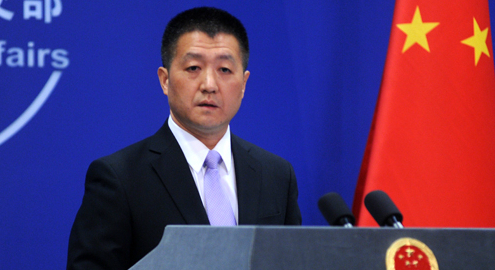
China opposed to new U.S. sanctions on North Korea: MFA, By Dagyum Ji Beijing urges Washington, Pyongyang to not “provoke each other”
China’s foreign ministry on Friday reiterated its opposition to unilateral sanctions by the U.S. against North Korea. “We are consistently opposed to the unilateral sanctions outside the framework of the UN Security Council,” Chinese foreign ministry spokesman Lu Kang told a regular press briefing in Beijing.
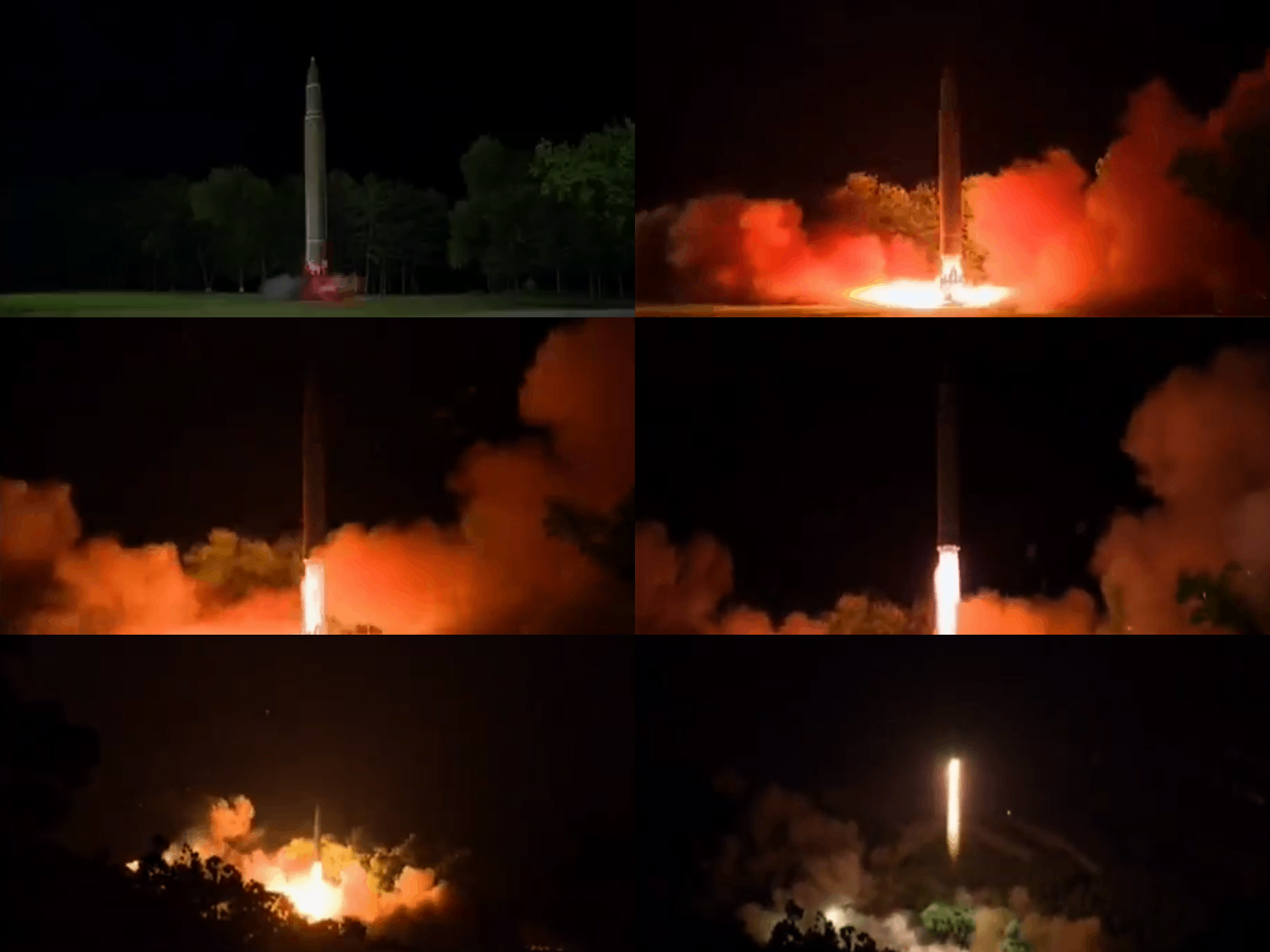
Upping the ante: the Hwasong-12 goes flying over Hokkaido, By Uzi Rubin The September 15 flight was a watershed event
September 15, 2017, saw what might be, arguably, the most provocative flight of a North Korean ballistic missile to date. At first glance, this was a repeat of the previous August 28 flight of an Hwasong-12 (HS-12) intermediate range ballistic missile (IRBM) over the Japanese island of Hokkaido, differing only in its longer range (3700 km).
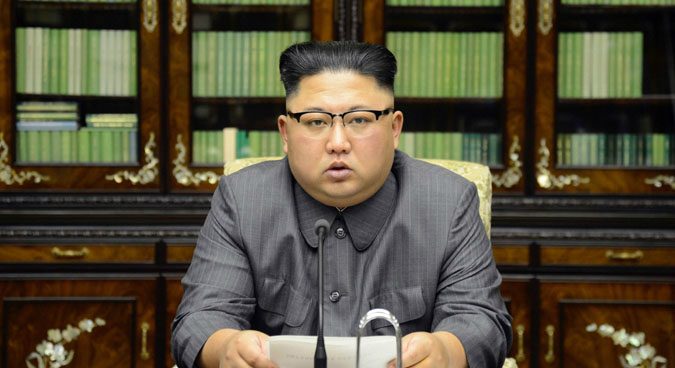
Kim Jong Un says U.S. will “pay dearly” for threats to destroy N. Korea, By Dagyum Ji DPRK leader attacks Trump’s UN speech as “mentally deranged”
The U.S. will “pay dearly” for recent threats by President Donald Trump to destroy the DPRK, North Korean leader Kim Jong Un said on Thursday, in a statement issued under his name on Friday.In a response to the President’s speech to the UN General Assembly on Tuesday, Kim warned that Trump would “face results beyond his expectation” and said North Korea would soon take “highest-level” actions in retaliation.
“I will make the man holding the prerogative of the supreme command in the U.S. pay dearly for his speech calling for totally destroying the DPRK,” the North’s Korean Central News Agency (KCNA) quoted the leader as having said in a rare statement. Kim also said Trump “could have expected” Pyongyang’s response when he “allowed such eccentric words to trip off his tongue.”
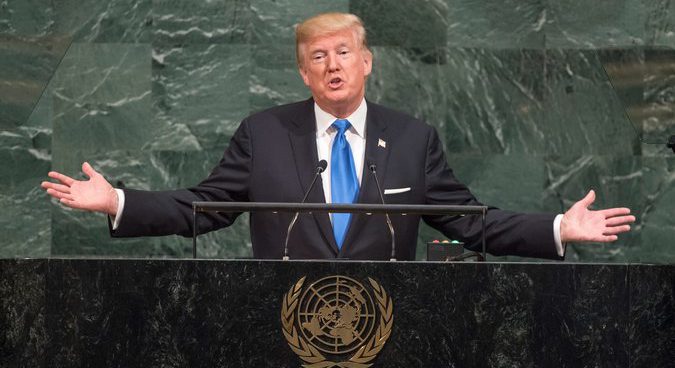
“His remarks… have convinced me, rather than frightening or stopping me, that the path I chose is correct.”In a widely anticipated first speech to world leaders on Tuesday, Donald Trump condemned the North Korean leadership as “gangsters,” and said the U.S. would be able to “totally destroy” the DPRK should it need to.
Kim said Trump had “made the most ferocious declaration of a war in history.”
“We will consider with seriousness exercising of a corresponding, highest level of hard-line countermeasure in history,” the statement read.“Action is the best option in treating the dotard who, hard of hearing, is uttering only what he wants to say,” Kim added, pledging that he would “surely and definitely tame the mentally deranged U. S. dotard with fire.”
In words that echoed Trump’s Tuesday speech, Kim described the U.S. President as a “rogue” and a “gangster.”
North Korea may test H-bomb in Pacific: DPRK foreign minister, By Dagyum Ji and Oliver Hotham Ri Yong Ho says “highest-level” actions promised by Kim Jong Un may be atmospheric test
The “highest-level” actions referred to be Kim Jong Un in a speech yesterday might involve the test of a hydrogen bomb in the Pacific Ocean, North Korea’s foreign minister said in New York on Thursday.
“It maybe means conducting the test of the strongest-ever Hydrogen bomb in the Pacific Ocean,” Ri Yong Ho said, when asked about Kim Jong Un’s promise of “corresponding, highest-level of hard-line countermeasure in history.”Speaking at a hotel located near the United Nations headquarters in New York, where he is due to make a speech to the General Assembly in the next few days, Ri said he was “not well-aware about what kind of measures will be taken.”
“Our comrade chairman of the State Affairs Commission is in charge,” he said, referring to Kim Jong Un.Ri’s comments come just hours after the release by the Korean Central News Agency (KCNA) of a statement by Kim Jong Un, in which he said the U.S. would “pay dearly” for recent threats to destroy the DPRK.
The statement was a response to a speech by U.S. President Donald Trump on Tuesday, in which the President described Kim Jong Un as a “rocket man” on a “suicide mission.”“The United States has great strength and patience but if it is forced to defend itself or its allies, we will have no choice but to totally destroy North Korea,” Trump told world leaders.
In his speech on Thursday, Kim Jong Un warned that Trump would “face results beyond his expectation” and that North Korea would soon take “highest-level” actions in retaliation.
Trump announces new measures targeting N. Korean trade networks, By Leo Byrne New EO ‘significantly expands’ U.S. authorities power to target entities working with the DPRK
U.S. President Donald Trump on Thursday announced a new Executive Order (EO) targeting North Korea’s trade and shipping networks, while also granting the U.S. Treasury Department additional powers to sanction banks dealing with the DPRK.
New U.S. executive order covers nearly all N. Korean trade, banks, By Leo Byrne New measures allow Treasury Department to cut financial institutions off from U.S. financial system
A new Executive Order (EO) signed by U.S. President Trump on Thursday will give the Treasury Department the ability to cut banks from the U.S. financial system for transacting with North Korea, and targets nearly all businesses trading with the DPRK.
Chinese newspapers interfering in N. Korean domestic affairs: state media, By Dagyum Ji KCNA editorial says Beijing media is “in collusion with the imperialists”
North Korean state-run media on Friday accused Chinese outlets of meddling in the country’s internal affairs “openly and habitually” and criticised its coverage of the DPRK’s nuclear program. Multiple outlets, including the Korean Central News Agency (KCNA) and the ruling party organ the Rodong Sinmun, carried a commentary called “Rude Deed of Shameless Media”.
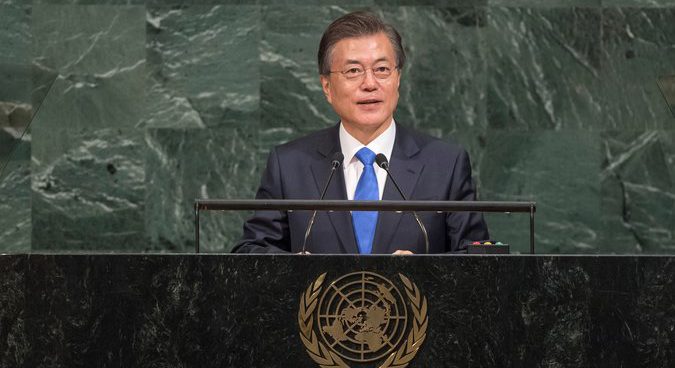
Moon promotes peace at the UN, urges N. Korea to engage in dialogue, By Hamish Macdonald ROK President says Seoul does not seek the collapse of the regime or reunification by absorption
In New York on Thursday, South Korean President Moon Jae-in delivered a message of peace and urged North Korea to engage in dialogue. Moon, in his first speech to the UN General Assembly, also issued a message directly to North Korea, saying that the Republic of Korea did not seek the collapse of the DPRK regime.
Donald Trump’s “we will bury you” moment, By Dennis P. Halpin The President echoed Nikita Khrushchev in his inflammatory UN speech – and allies should be worried
The staid diplomats of the UN had not likely witnessed as fiery a performance as that given by President Donald Trump on Tuesday since the 902nd Plenary Meeting of the United Nations General Assembly in October 1960. It was then that the Soviet leader reacted with fire and brimstone to remarks by the Philippines Ambassador Lorenzo.
Labor of love: the Cheollima movement in North Korean film, By Tatiana Gabroussenko From the 1950s to the 1980s, DPRK cinema extolled the ideological benefits of hard work
When Elena Berman, a Soviet citizen and the wife of the North Korean dramatist So Man Il, prepared to give birth to her son in a Pyongyang maternity hospital in 1959, she had a very unusual concern. It was not the insufficiency of the doctors’ skills or the lack of necessary medical equipment (curiously enough).
Top MHI-NK Stories from around the web:
EU envoys reach draft agreement on more North Korea sanctions(Asahi Shimbun) European Union ambassadors have reached an initial agreement on imposing more economic sanctions on North Korea, officials and diplomats said on Thursday, including a largely symbolic oil embargo and a ban on investments.
The EU is seeking to go beyond the latest round of United Nations Security Council sanctions imposed after North Korea’s sixth and most powerful nuclear test, conducted on Sept. 3.”Today the PSC (EU member states’ ambassadors) agreed on a package of new autonomous measures,” an EU official said.
The measures, if agreed on by EU foreign ministers at their next meeting on Oct. 16, are expected to ban any EU investment in North Korea and expand the number of luxury products prohibited for export there, an EU diplomat said
They are also likely to include a new limit on the size of money transfers to North Korea. They currently are capped at 15,000 euros ($17,900 or 2 million yen).In addition, some eight new North Korean officials are likely to be added to the EU sanctions list, stopping them from traveling to the bloc and freezing any assets in European banks.
Nuclear sub fuel, spy satellites likely on S. Korea’s arms shopping list (Yonhap News) As U.S. President Donald Trump promised support for South Korea’s pursuit of cutting-edge weapon systems, its so-called three-axis defense program is expected to receive a boost, government officials and experts said Friday.In talks with South Korean President Moon Jae-in held in New York on Thursday (local time), Trump agreed to reinforce the allies’ combined defense posture against North Korea through South Korea’s “acquisition and development of state-of-the-art defense assets.”
They also agreed to expand the deployment of the U.S. military’s high-profile “strategic” assets to Korea. It remains unclear whether Trump is trying to help the ally in need or he’s more interested in selling arms.
“I am allowing Japan and South Korea to buy a substantially increased amount of highly sophisticated military equipment from the United States,” the former business tycoon tweeted on Sept. 5 following the North’s claim of a hydrogen bomb test.Regardless of Trump’s intention, his approach provides South Korea with a good opportunity to upgrade its weaponry, defense officials here pointed out.
North Korea’s foreign minister is speaking at the U.N. Who is he? (Washington Post) When North Korea’s foreign minister takes the podium Friday at the U.N. General Assembly, it will mark a relatively rare public appearance of a representative from Kim Jong Un’s regime. Already, since he arrived in New York this week,Ri Yong Ho has made headlines, comparing President Trump to a barking dog and saying that he feels sorry for Trump’s aides.
“If he was thinking he could scare us with the sound of a dog barking, that’s really a dog dream,” Ri told reporters after arriving in New York on Wednesday. This was a reference to a North Korean saying that processions keep on moving even if dogs are barking. In Korean, a “dog dream” is one that is absurd and makes little sense, Yonhap reported.
When asked about the term “Rocket Man,” Trump’s new nickname for North Korean leader Kim Jong Un, Ri said: “I feel sorry for his aides.”
China turning away North Korean engineering students: report (Asia Times) In a sign that China is upping pressure on North Korea over its nuclear program, the South China Morning Post (SCMP) is reporting that Chinese universities are taking steps to limit the number of North Korean students in the country.
North Korean students seeking to major in physics or material science and engineering are reportedly being targeted for rejection. Recruiters at Chinese colleges told the SCMP that they are following orders from the central government in restricting or turning away North Korean students and have placed currently enrolled students under surveillance.“For those already on campus, we can’t send them back home, but each of them is closely watched and followed by security personnel, or through technical methods, to prevent them from obtaining sensitive materials,” one college official in Beijing said.
“If the [hydrogen bomb] test was conducted earlier, I’m not sure whether they could have made the trip,” he said, adding that his institution would rather stop all enrolment from North Korea as it brings “trouble” to the university.
The Calculated Logic Behind North Korea’s Missile Tests (The Diplomat)North Korea did it again. Within two weeks of a test of what it claimed to be hydrogen bomb – an act that earned its second round of United Nations sanctions in just two months – it launched another intermediate-range ballistic missile over Japan.
Compared to its first overflight in August, the missile flew higher and longer. In fact, it was North Korea’s most impressive missile flight demonstration, certainly in terms of range. It flew 3,700km, just enough to strike the U.S. territory of Guam.
North Korea overflew Japan in 1998, 2009, 2012 and 2016 with rockets meant to deliver satellites into orbit. But its two launches this year on August 29 and September 15 are a new kind of provocation. These missiles are designed to deliver nuclear warheads to military targets in East Asia and the Pacific.
North Korea’s nuclear tests have strategic and technical purpose. “With every missile test, it is worth remembering North Korea’s overarching goal when it comes to its security policy: the country has long sought an end to the United States’ “hostile policy” towards it and it believes that its nuclear weapons, by straining U.S. alliances, will allow it to achieve exactly this goal.
The “hostile policy” first and foremost includes the United States’ permanent forward deployed military presence in East Asia, but has recently extended to include everything from Washington’s push for sanctions at the United Nations and its strategic signaling in Northeast Asia. For example, through the use of B-1B Lancer conventional strategic bombers.
Petrol prices up by 43% in North Korean capital: source, By Chad O’Carroll
Prices have increased by more than 160% since April, when initial pricing spike occurred
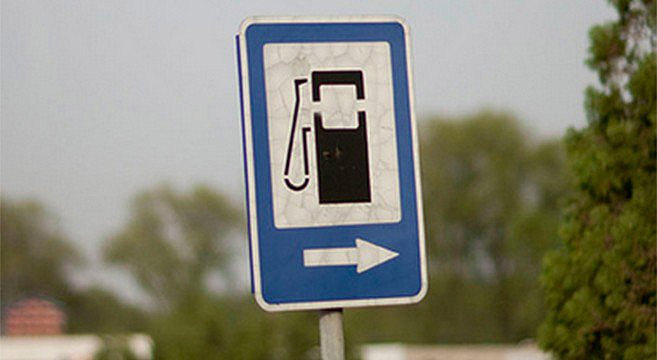
Petrol prices in Pyongyang increased by 43% on Thursday, an informed source told MHI-NK News, a significant and sharp spike upwards that builds upon a longer-term surge which kicked off in mid-April. The increase follows the recent passage of United Nations Security Council Resolution 2375, which introduced major new restrictions on exports of oil and gas.
South Korea approves plan for USD$8 million in aid to North Korea, By Dagyum Ji
Supplies will be delivered via UNICEF and the WFP
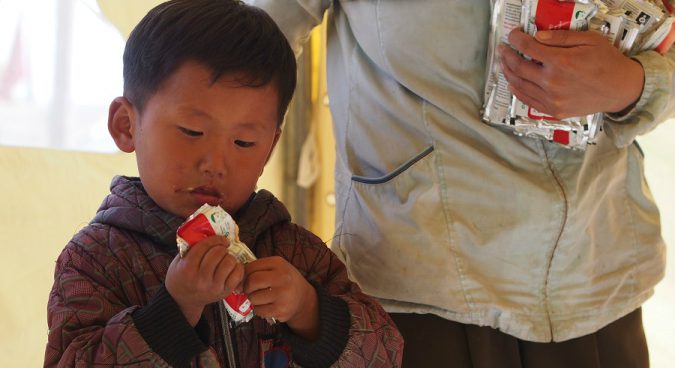
The South Korean government on Thursday approved plans to send over USD$8 million in humanitarian aid to North Korea via international organizations, the Ministry of Unification (MOU) announced. The unification ministry will provide USD$4.5 million to the World Food Program (WFP) for projects providing nutrition-enhancing foods for children in daycare facilities and pediatric wards.
U.S. missile defense could destroy North Korean ICBMs: Boeing CEO, By Leo Byrne
GMD missile defense system’s record is patchy, however, with tests done under ideal conditions
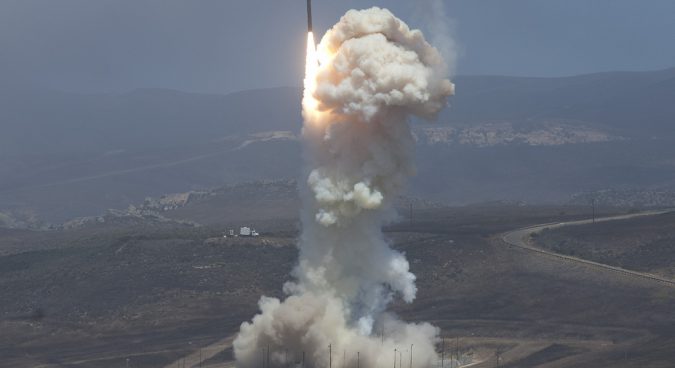
The CEO of Boeing’s Defense, Space and Security division on Wednesday said the U.S. was already able to defend against intercontinental ballistic missile (ICBM) attacks from North Korea, using the company’s Ground-based Midcourse Defense (GMD) system. Leanne Caret answered unequivocally “yes” when asked by CNBC if the GMD system could defend the United States from North Korea.
Pressure, not dialogue needed on North Korea: Abe, By Leo Byrne
Japanese prime minister tells the United Nations General Assembly that time is running out
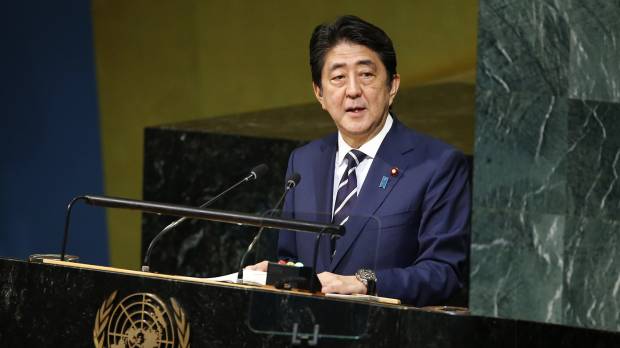
Japanese Prime Minister Shinzo Abe told the UN General Assembly in New York on Wednesday that pressure, not dialogue was the best option to denuclearize North Korea. Abe dedicated the majority of his UN address to the threat from the DPRK, calling it “unprecedented” and saying the nuclear non-proliferation regime was about to be dealtime.
Bearing witness: valuable, and underrated, North Korean defector memoirs, By Fyodor Tertitskiy
From unique insights to alleged fabrications, many accounts have been neglected by historians
All North Korean scholars know who Hwang Jang-yop was. A Dalai-lama-style picture of him sitting with a sad smile and crossed fingers has been featured again and again in articles on high-ranking North Korean defectors. There are, however, people who are at least equally (and, in my humble opinion, more) interesting.
Top MHI-NK Stories from around the web:
S. Korean president invites N. Korea, world to PyeongChang Olympics in New York gala (Yonhap News) President Moon Jae-in put on his second hat Wednesday, inviting the world to the Winter Olympic Games to be held in his country early next year. The honorary ambassador of the 2018 PyeongChang Games also extended an invitation to North Korea,saying its participation will highlight the possibility of peace and reconciliation on the Korean Peninsula.
“Tensions are high now, but that is only the reason why we more need peace,” the South Korean leader said in a special event in New York aimed at the upcoming international sporting event to be held in PyeongChang, located 180 kilometers east of Seoul.
“If the South and the North can join together at a time like this, it will be a great opportunity to send a message of reconciliation and peace to the world,” he added.
Mattis: Diplomacy still leads in effort to denuclearize N. Korea(Korea Herald) US Defense Secretary Jim Mattis said Wednesday that diplomacy will still take the lead in efforts to denuclearize North Korea. Speaking at a military conference near Washington, Mattis said the Pentagon “fully supports” that campaign by ensuring military options also exist.
“It is still a diplomatically led effort,” he said, pointing to the UN Security Council’s recent adoption of two sanctions resolutions against Pyongyang.
“You see it as a primary effort of the United Nations General Assembly meetings going on this week in New York,” he said. “We continue to press on the diplomatic level. That includes economic sanctions. But at this time we must also recognize the somber reality that military options must be available in order to protect our allies and ourselves.”
North Korea has ratcheted up tensions by firing a series of ballistic missiles and conducting a sixth nuclear test earlier this month.
On Tuesday, US President Trump said in an address to the UN General Assembly that the US may have no choice but to “totally destroy” North Korea if it is forced to defend itself or its allies.
In U.N. speech, Abe says time for talk is over on North Korea (Asahi Shimbun) Prime Minister Shinzo Abe said on Wednesday that countries need to unite to enforce sanctions and apply pressure on North Korea to abandon its nuclear and missile programs.
“Now is not the time for dialogue. Now is the time to apply pressure,” Abe told a gathering of investors at the New York Stock Exchange, remarks he later reiterated in an address to the annual United Nations General Assembly.
On Tuesday, U.S. President Donald Trump warned North Korea in his speech to the U.N. that the United States would “totally destroy” the country if threatened.
In contrast, Japan’s Asian rival China, and Russia, have called repeatedly for a return to international diplomacy and talks with North Korea to resolve the crisis over Pyongyang’s weapons programs.
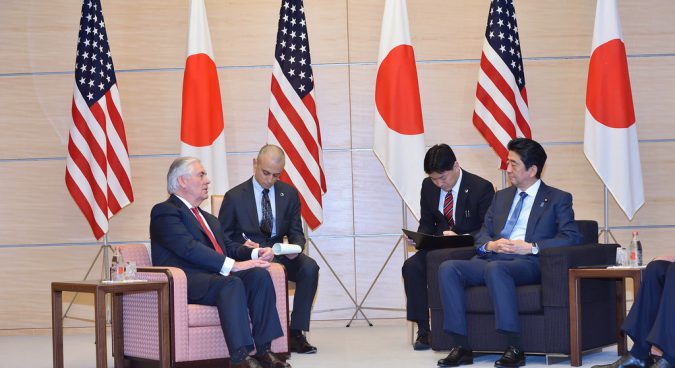
Trump team’s battle with North Korea has a glaring omission on the front lines (Washington Post) Eight months into Trump’s tenure, he has yet to officially nominate a U.S. ambassador to South Korea. “In some ways, Trump and his White House aides are personally compensating for that absence. On Thursday, Trump will meet separately with Moon and Japanese Prime Minister Shinzo Abe on the sidelines of the U.N. General Assembly.The three leaders also will hold a trilateral discussion on North Korea’s nuclear and ballistic missile programs, the second time the three have done so during Trump’s tenure.
Moon, who took office in May after Park Geun-hye resigned in scandal, also met with Trump at the White House in June for two days of meetings, including a working dinner.
But behind the scenes, Korea watchers in Washington say they are perplexed about the lengthy delay in filling the State Department’s top Seoul post. Since the spring, the leading — and perhaps only — candidate said to be in consideration has been Victor D. Cha, a former George W. Bush administration Asia policy aide who is the Korea chair at the Center for Strategic and International Studies.
Save North Korean Refugees Day: This Friday, September 22nd, By Joshua Stanton (One Free Korea) What sort of place could be so horrible that a family of five would choose to die together rather than be sent there? The answer, of course, is this place, or this one, or this one, or this. Here is the story of a family that made that choice…
A North Korean family of five, including a former senior official of the Workers Party, committed suicide last week after they were caught by Chinese police and faced deportation to the North. They were heading to South Korea.
Activist Kim Hee-tae told the Chosun Ilbo on Sunday, “Fifteen defectors who were on their way to South Korea were caught by police in the Chinese province of Yunnan a week ago.”
“They killed themselves by taking poison after they were taken to Shenyang, Liaoning Province three days ago and faced deportation to the North,” he added. They were a 50-something senior official of a regional agency of the Workers Party, his wife, son and two daughters.
“Right after they were caught in Yunnan, they tried to bribe their way out through a local fixer, but once they were taken to Shenyang they probably lost hope and killed themselves,” Kim speculated. [Chosun Ilbo]
The story was also reported by Radio Free Asia. Otherwise, the U.S. and foreign press almost completely ignored the story.
To : <redaksi@mediahukumindonesia.com>Date : Sat, 09 Sep 2017 00:48:58 +0700 Subject : The President’s Weekly Address
The President’s Weekly Address
————-
Hurricane Irma Preparation President Trump and Vice President Pence met with senior members of the Administration yesterday to discuss initial Federal support for Hurricane Irma preparation, response and recovery, as well as ongoing support for recovery from Hurricane Harvey. Read more
President Trump Approves Disaster Declarations President Trump has approved an emergency declaration in the States of South Carolina, Georgia, and the territory of the U.S. Virgin Islands.
President Trump Welcomes the Amir Sabah al-Ahmed al-Jaber al-Sabah of Kuwait On Thursday, President Trump met with the Amir Sabah al-Ahmed al-Jaber al-Sabah of Kuwait to discuss the importance of cooperation between the United States and Kuwait in defeating terrorism as well as the economic partnership the two nations share. The Amir extended his thoughts and condolences to those affected by Hurricane Harvey and Hurricane Irma. Watch the joint press conference
Photo of the Day
President Donald J. Trump and Amir Sabah al-Ahmed al-Jaber al-Sabah of Kuwait | September 7, 2017 (Official White House Photo by Stephanie K. Chasez)
Coming Up this Weekend
President Trump and First Lady Melania Trump have invited all members of the Cabinet and their spouses to Camp David this weekend. President Trump will hold his fourth Cabinet meeting on Saturday and will lead discussion on the Administration’s priorities in addition to receiving briefings on Hurricane Harvey recovery efforts and preparation for Hurricane Irma.
White House Spring Internship
Today is the last day to apply for the Spring 2018 White House Internship Program! Apply here















 MHI
MHI 


