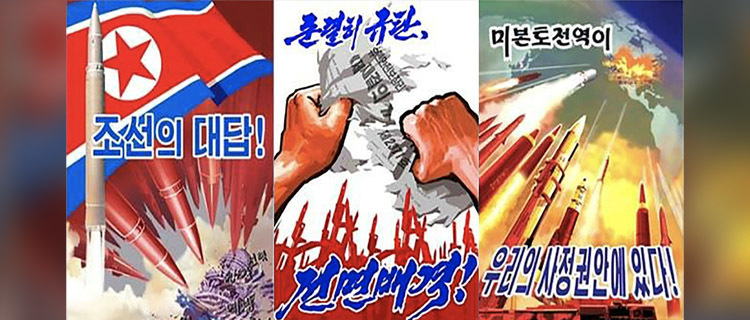
Resolution 2397 bans N. Korea from buying all machinery, electronics, vehicles, and metals, By Leo Byrne In addition, DPRK’s earnings from exports should dwindle to just a few million per month under new sanctions
The UN’s newest sanctions on North Korea issued December 22 took some of the strongest measures yet against countries looking to trade with North Korea, with Washington seemingly working its way towards a near-total trade embargo. But while U.S. Ambassador to the UN Nikki Haley mentioned the new restrictions targeting North Korea’s exports.
—————————————————–
China reports commodity trade with North Korea rose in November, By Seungmock Oh The increase took place despite strict sanctions on the DPRK
———————————————————
S. Korean military to launch specialized division on N. Korean nuclear program, By Dagyum Ji Defense ministry will place division under new DPRK policy bureau as part of reshuffling
—————————————————-
UNSC Resolution 2397: What it means for North Korea, By Scott LaFoy New measures are both “immediately harsh” and position UNSC for strict follow-on sanctions
The United Nations Security Council (UNSC) on Friday agreed on Resolution 2397. The resolution is notable in that it is both immediately harsh and positions the UNSC for a very strict set of follow-on sanctions. 2397 caps DPRK fuel imports, sets up the fuel cap regime for harsher measures down the line, terminates DPRK laboratorium.
————————————————————
Why foreign NGOs and tourists can’t visit North Korea’s Jagang Province, By Fyodor Tertitskiy Research suggests large-scale munitions industry presence could be a contributing factor
There are many places North Korea does not allow foreigners to visit. One of the most prominent bans covers an entire province – Jagang, in the country’s north – where restrictions appear to prohibit the majority of foreign diplomats, NGO personnel, and tourists from visiting, Since at least 2013.
—————————————————-
Peru to expel two North Korean diplomats , By Seungmock Oh In announcement, Ministry of Foreign Affairs cites violations of recently adopted UN resolution
———————————————–
Ask a North Korean: What was your first Christmas in South Korea like? By Park Ui-sung “Just two years ago, the holiday known as Christmas felt awkward to me …”
Top MHI-NK Stories from around the web:
Signs detected of N.K. preparing for PyeongChang Paralympics: Seoul (Yonhap News) South Korea’s unification ministry said Tuesday that there are some signs that North Korea is preparing to take part in the PyeongChang Paralympics slated for March, though the North has not officially announced if it is joining.
The PyeongChang Paralympics will be held from March 9-18 in South Korea, after the South hosts the Winter Olympics from Feb. 9-25. North Korea has yet to officially express its intent to participate in the events. “At the working level, North Korea is known to be preparing for the Paralympics,” said an official at the Ministry of Unification.
The official said that he cannot elaborate on details, adding that whether North Korean athletes are undergoing overseas training is not verified. Seoul is pinning hopes on the North’s participation in the Winter Olympics as it believes that the move will help ease tensions on the Korean Peninsula.
President Moon Jae-in said that he proposed to the United States delaying the allies’ joint military drills that would coincide with the PyeongChang Olympics or the Paralympics. The North has long denounced the exercises as a war rehearsal despite the allies’ reassurance that they are defensive in nature.
—————————————————————-
North Korea UN ambassador demands US prove ransomware claim (LA Times) North Korea’s envoy in charge of U.S. affairs at the United Nations demanded Washington provide evidence to back up its claim Pyongyang was behind the Wannacry ransomware attack, an allegation has said was a “baseless provocation” being used to generate tensions.
Pak Song Il told The Associated Press in a telephone interview from New York late Monday that Pyongyang sees the allegation as an effort to create an “extremely confrontational atmosphere.””If they are so sure, show us the evidence,” he said.The WannaCry ransomware attack infected hundreds of thousands of computers worldwide and crippled parts of Britain’s National Health Service in May.
U.S. Homeland security adviser Tom Bossert wrote in a Wall Street Journal op-ed published last week that the U.S. administration had determined North Korea was behind the WannaCry attack. He said its finding of responsibility is based on evidence that has been confirmed by other governments and private companies, including the United Kingdom and Microsoft.He wrote that North Korea would be held accountable.
North Korea’s state-run media quickly condemned the accusation, saying Pyongyang would never tolerate such “reckless” claims. It called Bossert’s claim a “grave political provocation” and vowed to retaliate.
Officials in Washington and Seoul have accused the North of launching a series of cyberattacks in recent years, including the hack on Sony Pictures Entertainment over the movie “The Interview,” a black comedy about a plot to assassinate North Korean leader Kim Jong Un.The North has denied those accusations as well.
——————————————————
N. Korea likely to explore possibility of talks with U.S. in 2018: ministry (Yonhap News) “North Korea may continue to advance its nuclear and missile capabilities while searching for an outlet externally,” the ministry said in its predictions for North Korea in 2018. “In searching for the recognition of its status as a de facto nuclear-possessing state, (the North) would explore the possibility of negotiations with the U.S…”
At the same time, the North is also likely to attempt to engage with South Korea in order to restore inter-Korean relations next year, it also said. It added that the ministry will closely watch North Korean leader Kim Jong-un’s New Year address on Jan. 1 to see if it alludes to such possibilities. For this year, North Korea has distanced itself from dialogue and engagement with South Korea as it attempted to work out its relationship with the U.S. ahead of that with the South, according to the ministry.
Next year, North Korea is expected to start to feel the pinch of international and bilateral sanctions on the country’s nuclear and ballistic missile programs, the ministry said.
————————————————–
Kim Jong Un says he will embark on large and bold projects (Dong-a Ilbo) North Korea’s official Korean Central News Agency (KCNA) quoted North Korean leader Kim Jong Un as saying that he would embark on large and bold projects to build a great socialist country at the fifth conference of cell chairs of the Workers’ Party of Korea.Kim was also quoted as saying by Sunday’s report, “What we have done so far is only the start, and the Workers’ Party is planning bold and larger projects for the people.”
Some interpret the “bold and large projects” as the resumption of talks, but others believe he will make additional provocations different from past missile launches. They could even be the missile fires near the U.S. Pacific territory of Guam, which was announced by Kim Jong Un in August, or launching North Korea’s new Intercontinental Ballistic Missile (ICBM) Hwasong-15 that was launched last month at a normal angle. However, the public opinion is that the rogue regime is referring to internal discipline of the party.
South Korean presidential office Chung Wa Dae is cautious in responding, while saying, “We will have to watch North Korea closely to figure out its real intention and future plans.”
————————————————————–
N. Korea Says It’s a ‘Pipe Dream’ That It Will Give Up Nukes (New York Times) North Korea said it is a “pipe dream” for the United States to think it will give up its nuclear weapons, and called the latest U.N. sanctions to target the country “an act of war” that violates its sovereignty.
The U.N. Security Council unanimously approved tough new sanctions against North Korea on Friday in response to its latest launch of a ballistic missile that Pyongyang says can reach anywhere on the U.S. mainland. The resolution was drafted by the United States and negotiated with the North’s closest ally, China.
“We define this ‘sanctions resolution’ rigged up by the U.S. and its followers as a grave infringement upon the sovereignty of our Republic, as an act of war violating peace and stability in the Korean peninsula and the region and categorically reject the ‘resolution,'” North Korea’s foreign ministry said in a statement on Sunday.
The ministry said the sanctions are tantamount to a “complete economic blockade” of North Korea.
“If the U.S. wishes to live safely, it must abandon its hostile policy towards the DPRK and learn to co-exist with the country that has nuclear weapons and should wake up from its pipe dream of our country giving up nuclear weapons which we have developed and completed through all kinds of hardships,” said the statement, carried by the North’s official Korean Central News Agency.
When it comes to African economies, particularly in sub Saharan Africa, many of us are instinctively aware that most markets are dominated by their informal sectors.
The International Labour Organization (ILO) has estimated the informal sector’s average size as a share of GDP in sub-Saharan Africa is 41%. This is as low as under 30% in South Africa to 60% in Nigeria and Tanzania. It’s an even bigger employer, representing some 75% of non-agricultural employment, and over 70% of total employment in sub-Saharan Africa. More than 90% of new jobs created in some African countries are in the informal economy.
To be clear, the vibrancy of the informal sector is as much out of necessity as it is a sign of the vibrancy and entrepreneurial spirit of Africans. It’s no coincidence that Africa’s most advanced economy, South Africa, has one of the lowest shares of GDP attributed to the informal sector. But for many African countries—as in other emerging markets around the world—the paucity of basic infrastructure and smaller corporate sector, means the informal sector is often the main option for economic opportunity. And this won’t change anytime soon, World Bank research found people with higher education are increasingly seeking work in the informal sector.
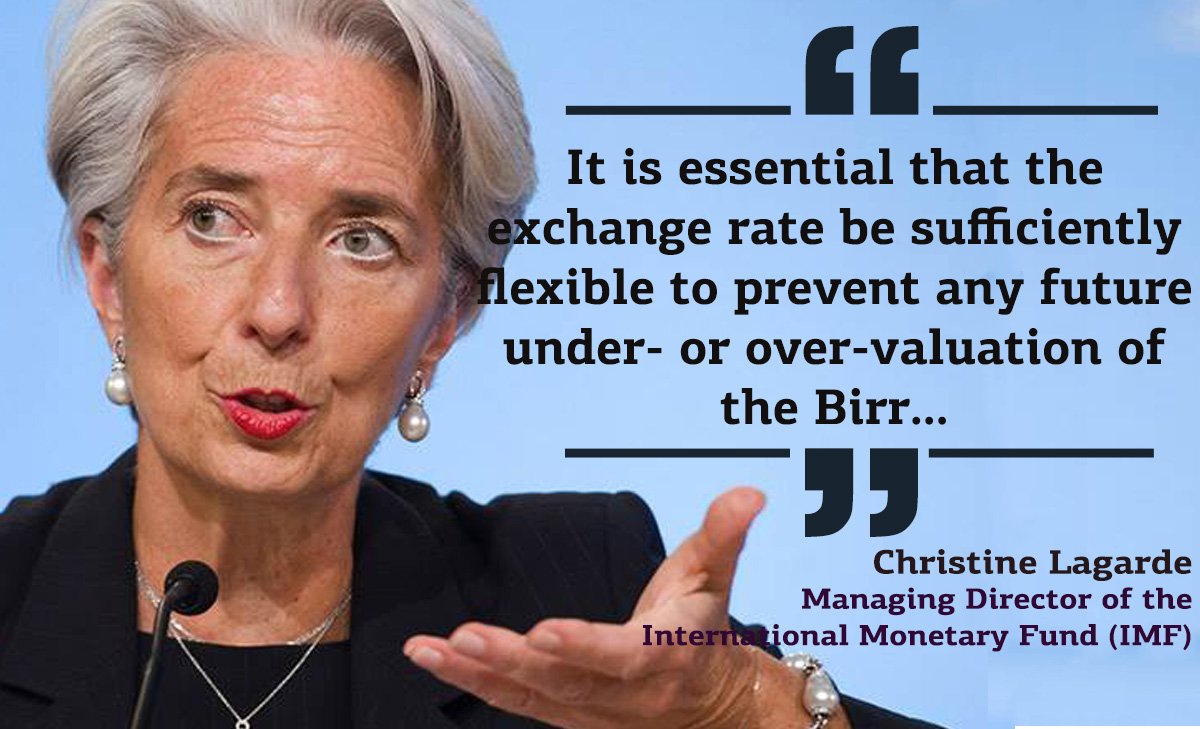
This isn’t good news for African governments as the informal sector, by its very definition, usually implies lower tax revenue opportunities. This comes at a time when multilateral organizations like the World Bank and IMF are pressuring African governments to diversify from commodities and step up revenue collection—as Christine Lagarde did in her interview with us while in Addis Ababa earlier this month.
But what role has digital technology played in enabling, or even undermining, the informal sector? This is what researchers at London School of Economics set out to uncover in a new white paper.
The paper is generally optimistic, but clear-eyed, about the potential of new information technology to enhance various sectors from agriculture and transport to mobile money and employment. But it cautions, “digital innovations are not only disruptive of formal economies; they can also disrupt structures and routines in the informal economy, bypassing and disadvantaging some precarious workers even as they include others.”
The researchers are concerned that some at the bottom of the economic pyramid could get left behind if the focus of new technology’s impact is just about productivity increases, reduced transaction costs and low value jobs. They suggest the focus should be on “public benefits, decent work, long-term economic development and social protection for poorer people. They also suggest a greater focus on public as well as market-led forms of digital innovation.
— Yinka Adegoke, Q-MHI Africa editor
SPONSOR CONTENT BY DOCTORS WITHOUT BORDERS
In a disaster zone, speed is of the essence. Doctors Without Borders creates innovative facilities, like inflatable hospitals and mobile surgical trailers, which provide humanitarian relief around the world. To help Doctors Without Borders save lives, consider donating.
STORIES FROM THIS WEEK
Why bitcoin trading has been booming in Nigeria. Peer-to-peer trading of bitcoin in Nigeria increased by nearly 1,500% in 2017. Reporting from Lagos, Yomi Kazeem explains why the cryptocurrency trade volume is increasing and the crop of local exchanges that are easing this process.
Ghana’s underground hip-hop artists are using their music to raise environmental awareness. In the music video for his song Gold Coast, released last year, Ghanaian rapper ELi stands on Accra’s Labadi beach,Over the last few years, Ghana’s beaches have become clogged with garbage and its city drowned in plastic bottles. Rachel Leah reports from Accra on how rappers are using music to raise environmental awareness and hold the government accountable.
IMF’s Christine Lagarde warns Africa to watch out for its oncoming debt crisis. In an exclusive interview with Q-MHI Africa, IMF managing director Christine Lagarde warned that some African countries could see their debt burden triggered in 2018 as richer economies improved. She also discussed Africa’s opportunity in manufacturing, unemployment, startups and IMF’s evolving relationship with Africa.
How Ghana became West Africa’s international visa fraud capital. For over a decade, visa fraud in Ghana has risen to involve both ordinary citizens and even members of parliament. The growth of this industry, Yepoka Yeebowrites from Accra, is now putting the identity of frequent travelers with legitimate documents at risk.
Kenya wants to make its matatus a safe space for women. For many women in Kenya, getting on the popular matatu buses means risking harassment and even rape. But as Stephanie Wanga explains, a new private-public campaign is implementing a plan to make sexual harassment and its tolerance an expensive affair for bus owners and operators.
The good and bad trends that shaped Africa’s digital space in 2017. Internet shutdowns and the spread of fake news on social media were some of the issues that affected African internet users this past year. And while there’s plenty of bad precedents, Abdi Latif Dahir recounts some of the good that came out of the tech sector too.
CHART OF THE WEEK
Cyril Ramaphosa could solve South Africa’s problems—by reforming his party first. South Africa’s ruling ANC electedbusinessman and former union activist Cyril Ramaphosa as the party’s next president. Expected to become president in 2019, his victory and the prospect that he would steer the economy in the right direction, saw the rand reach its strongest levels. But as Lynsey Chutel notes, Ramaphosa has a difficult task ahead, key among them uniting a divided party.
OTHER THINGS WE LIKED
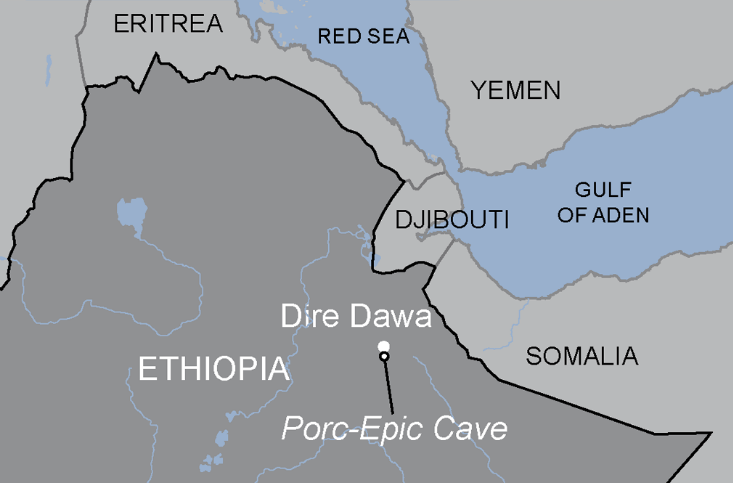
The African Enlightenment started 100 years before John Locke and Emmanuel Kant. The Enlightenment thinkers in Europe are credited for developing the ideas about reason, tolerance and liberty that have come defined our modern societies. But as Dag Herbjørnsrud writes in Aeon magazine, those rationalist philosophies were first professed from a cave by a seventh century Ethiopian philosopher named Zera Yacob.
How to make millions selling passports to Africa. Getting a passport in African countries is an expensive, and in many times, corrupt affair. In this Reuters investigation, David Lewis and Philippe Engels explain how one company profited from making passports for multiple African nations through bribery and illicit deals while securing honorary consulships for its employees.