

Good morning, Q-MHI readers!

Some 10 days ago, two promising, charismatic young leaders went to ritually commune with the blue-collar masses. Emmanuel Macron, whom France will probably elect president on May 7, went to a Whirlpool plant in Amiens, while Facebook CEO Mark Zuckerberg dropped in at a Ford factory near Detroit.


Macron’s visit will be remembered chiefly because his right-wing rival, Marine Le Pen, got there first and upstaged him, casting him as an elitist out of touch with the common worker. Zuckerberg’s visit, while a lot less dramatic, may be remembered because it was the first in a 30-state tour that looks suspiciously like the start of a possible campaign for the US presidency.


What made the two visits similar was their incongruity. Each involved a man who claims to speak for the future paying homage at a temple of the past—the factory. Macron was evidently trying to look alert to voters’ worries about globalization, since Whirlpool plans to move its plant to Poland.

Zuckerberg seemed to be trying to look sensitive to fears of automation (though his admiring comment about how assembly-line workers performed the same set of tasks “every 52 seconds…650 times a day” also read like a veiled warning: What could be a more perfect job for a robot?)

In reality, globalization and—to a larger extent—automation have already claimed many manufacturing jobs in the West and will doubtless claim more. If factories can be brought back from Asia and eastern Europe, they will be staffed by machines. And yet even Mark Zuckerberg feels he must begin his tour by making obeisance to the factory-worker gods. That suggests that no politician (or would-be politician) is yet willing to confront voters with the impending reality, nor prepared to make the hard political decisions it will inevitably entail.—Gideon Lichfield
SOME THINGS ON Q-MHI WE ESPECIALLY LIKED

The Instagram CEO is bad at Instagram. And that’s good, Leah Fessler argues. For founders, a lack of expertise in their company’s core offering can help them understand their average consumer.

New York is not the next Silicon Valley. Etsy was supposed to be New York’s Google, but its troubles suggest no such thing is possible. Sarah Kessler, who has followed the city’s start-up scene since 2010, explains why that might not be a bad thing.

The forgotten comic-book mastermind who created Rocket Raccoon. Oliver Staley meets Bill Mantlo, one of the many comic creators who toiled in obscurity in the 1970s and ‘80s. He is now confined to a rehab center after a traumatic car accident while his character, Rocket Raccoon, thrives on the big screen in the Guardians of the Galaxy movies.


Multiplex,” “Dragon City,” and more.
Cheap Chinese goods in Africa are over. Years of quick profits have led to a glut of cheap products, and now malls filled with identical goods lie empty. Lily Kuo reports from Eastleigh in Nairobi, once a sleepy residential neighborhood and now one of the most globally connected trade hubs in Africa. Also from Kuo: Why the Chinese are now leaving South Africa.


Those wildlife photos? Maybe not shot “in the wild.” Photography “game farms” are a controversial but convenient way for photographers to get photos of dangerous animals. Selina Cheng gets a behind-the-scenes look at how iconic photographs are staged.


The sex-trafficking victims of climate change. By destroying livelihoods, climate change places women and children in vulnerable situations, ripe for exploitation by traffickers. Justine Calma looks at the fallout of Typhoon Haiyan in the Philippines.

The on-demand economy is on the way out. Services that deliver food, dry-cleaning and cab rides at the touch of a button have made some people’s lives easier. But Sunil Rajaraman, a tech entrepreneur and writer, argues that the bubble is about to burst.
Q-MHI ANNOUNCEMENT


Do we deserve to be happy? It’s a commonly accepted truism now, but throughout most of history humans were preoccupied with survival rather than the pursuit of well-being. Find out what changed and explore other stories that examine our preoccupation with happiness in the Happiness Experiment.
FIVE THINGS ELSEWHERE THAT MADE US SMARTER

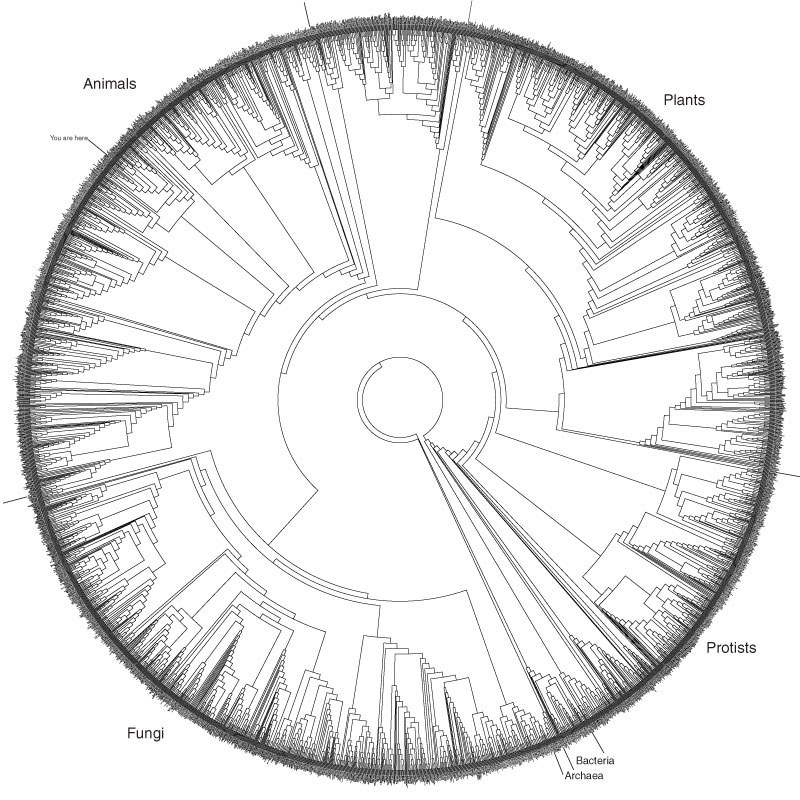

Reasons not to fear a superhuman AI. Veteran tech writer Kevin Kelly argues in Backchannel that warnings of a robot takeover (see Bill Gates, Elon Musk, Stephen Hawking, et al.) fundamentally misconstrue what artificial intelligence is. The key is to think of intelligence not as a linear scale, but as a vast possibility space. AI won’t be superior, just very different—vastly better at some things and not at others.


Taiwan’s obsession with the culinary texture known as “Q.” Foodies in Taipei and beyond can’t get enough of the springy and chewy mouthfeel found in mochi, fish cakes, and dumplings. For transplants like Roads and Kingdoms’ Laura Russell, understanding Q is the secret to unlocking Taiwan’s dizzying gastronomic delicacies.


| ADJUSTED VOTE MARGIN | ||||
|---|---|---|---|---|
| CLINTON VOTE MARGIN | SMALL COMEY EFFECT* | BIG COMEY EFFECT* | CLINTON’S ELECTORAL VOTES HAD SHE WON | |
| Michigan | -0.2 | +0.8 | +3.8 | 248 |
| Pennsylvania | -0.7 | +0.3 | +3.3 | 268 |
| Wisconsin | -0.8 | +0.2 | +3.2 | 278 |
| Florida | -1.2 | -0.2 | +2.8 | 307 |
| Nebraska’s 2nd C.D. | -2.1 | -1.1 | +1.9 | 308 |
| Arizona | -3.5 | -2.5 | +0.5 | 319 |
| North Carolina | -3.7 | -2.7 | +0.3 | 334 |
| Georgia | -5.1 | -4.1 | -1.1 | 350 |
| Ohio | -8.1 | -7.1 | -4.1 | 368 |
| Texas | -9.0 | -8.0 | -5.0 | 406 |
| Iowa | -9.4 | -8.4 | -5.4 | 412 |
Philosophy, political correctness, and punishment. In March, Rebecca Tuvel, an assistant philosophy professor, published a provocative article in an academic journal asking if racial identities could be as fluid as gender identities. As New York Magazine’s Jesse Singal writes, the reaction was fierce, and Tuvel became the target of a “massive internet witch-hunt,” a disturbing precedent for academic freedom.
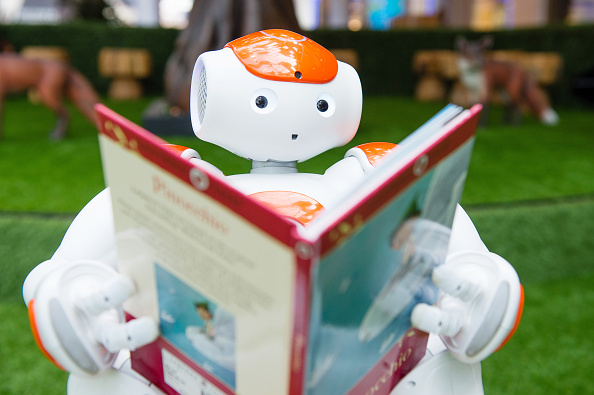
Could algorithms make better art than humans? For Bloomberg View, historian Yuval Noah Harari conceives a thought experiment, plausible in the not-too-distant future: a computer that chooses and even composes music perfectly tuned to your personality and emotions. “If art is defined by human emotions,” he writes, would this not be art? And what chance do human artists then stand?
Q-MHI 


Tidak ada komentar:
Posting Komentar